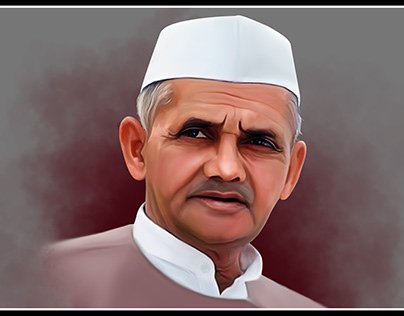
The proverb “Charity begins at home” reminds us that genuine change, sacrifice, and goodwill must start within our own four walls before we can inspire the wider world. No Indian leader embodied this idea more powerfully during a national crisis than Lal Bahadur Shastri, India’s second Prime Minister (1964–1966). When the country faced a severe food grain shortage in the mid-1960s—exacerbated by back-to-back droughts, the 1965 Indo-Pak War, and heavy dependence on American food imports—Shastri did not merely issue appeals. He first practiced austerity in his own home, proving that true leadership begins with personal example.
The Crisis and Shastri’s Resolve
India in the mid-1960s was battling acute food scarcity. Millions lived on the edge of hunger, and the government was forced to import large quantities of wheat under the U.S. PL-480 program. Shastri viewed the “food front” as equally critical as the military front. Rather than relying solely on external aid or top-down orders, he called for collective self-sacrifice and self-reliance. But he refused to ask the nation to endure hardship he had not first tested himself.
Sacrifice That Started at Home
Before addressing the country, Shastri turned to his own family. He asked his wife, Lalita Shastri, and their children to skip one meal—usually dinner—every day for an entire week. The family lived simply in their official residence. By experiencing the pangs of hunger firsthand, Shastri wanted to understand the real difficulty ordinary citizens would face and ensure his appeal carried moral authority. His son, Anil Shastri, later recalled the episode: the family successfully completed the week-long test of skipping the evening meal. Only then did Shastri feel confident enough to speak to the nation.
This personal act of sacrifice perfectly illustrates “charity begins at home.” Shastri did not preach from a podium; he lived the principle first in his own household.
The National Call for Voluntary Austerity
In a radio broadcast to the nation around 1964–65, Shastri urged every Indian to voluntarily give up one meal per week. Many observed this as a “Monday fast” (often called the Shastri Vrat). The response was overwhelming. Restaurants and eateries across the country closed for one day each week, and ordinary families joined the effort. The saved food grains were channelled to those most in need. It was a remarkable display of national unity born from a leader’s authentic example.
Leading by Example Beyond the Dinner Table
Shastri did not stop at meal sacrifice. He encouraged citizens to utilise every inch of available land for cultivation. He famously ploughed the lawn of his official residence on Janpath (now 10 Janpath) in Delhi and sowed wheat himself. His slogan became: “Two grains should now grow where only one grew before.” His wife, Lalita Shastri, later harvested the crop. This symbolic act inspired thousands to start kitchen gardens and maximise food production even in urban spaces.
He also introduced broader austerity measures: rationing in major cities, price controls on essential commodities, and discouragement of lavish weddings or parties. Through the inspiring slogan “Jai Jawan Jai Kisan” (Hail the Soldier, Hail the Farmer), he linked national defence with agricultural self-reliance, boosting the morale of both soldiers and farmers during the 1965 war.
Laying the Foundation for Self-Reliance
While the immediate steps focused on conservation, Shastri also sowed the seeds of long-term solutions. He prioritised agricultural reforms, supporting high-yielding variety seeds, expanded irrigation, and incentives for farmers. These efforts laid the groundwork for the Green Revolution that would eventually make India food-sufficient. His vision extended to the White Revolution through cooperatives like Amul, strengthening milk production as well.
A Leader’s Integrity That Amplified the Message
Shastri’s personal integrity further strengthened his call. Known for his simplicity, he once took a small bank loan to buy a family car and ensured it was repaid promptly. His life reflected the values he asked others to follow. This authenticity turned a mere government appeal into a powerful national movement of shared sacrifice.
Relevance Today
In an era of global challenges—be it climate change, economic uncertainty, or resource scarcity—Shastri’s story remains profoundly relevant. “Charity begins at home” is not just about giving money; it is about practising the values we wish to see in society. Whether it is reducing food waste in our kitchens, conserving water and energy in our homes, or teaching children the importance of empathy, real change starts with us.
Lal Bahadur Shastri showed that when a leader begins with personal sacrifice, a nation finds the strength to overcome even the toughest crises. His legacy reminds every Indian—and every citizen of the world—that the greatest revolutions often begin, quite literally, at the family dinner table.
As Shastri himself proved: true service to the nation starts at home.
Leave a Reply