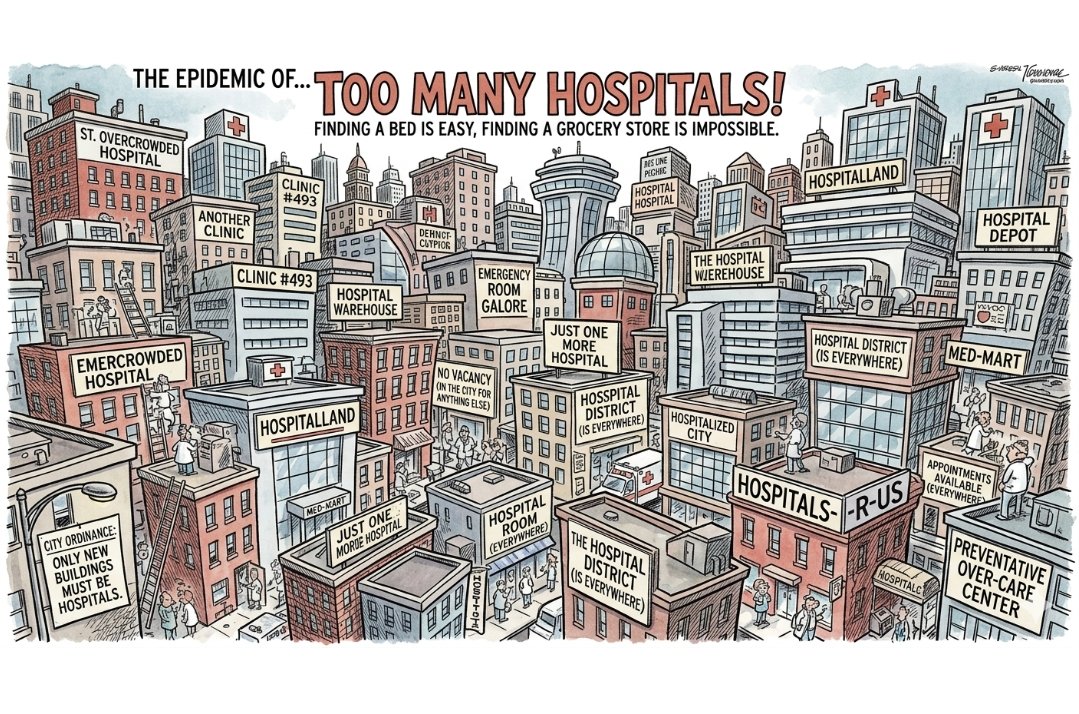
In the heart of Vadodara’s peaceful housing societies — where children once played safely and families parked without a second thought — a new “development” is quietly turning neighbourhoods into chaos. Tiny “mini-hospitals” and nursing homes are mushrooming inside residential complexes, often with just 10-20 beds, promising world-class care. But here’s the shocking truth: most have zero dedicated parking, zero proper biomedical waste management, and zero regard for the law. Yet they are magically empanelled with every major insurance company in India, offering seamless cashless treatment. And who’s cheering them on? The Vadodara Municipal Corporation (VMC) and local politicians.
This isn’t development. This is daylight exploitation of residents, enabled by official apathy and political patronage.
Parking? What Parking?
Walk into any society in areas like Gotri, Waghodia Road, Akota, or Alkapuri these days and you’ll see it: ambulances double-parked, patient vehicles choking narrow internal roads, and visitors blocking society gates for hours. Gujarat’s General Development Control Regulations (GDCR) clearly mandate minimum parking spaces for hospitals based on bed strength and built-up area. A 20-bed facility needs dedicated visitor and staff parking plus open space. Most of these mini-hospitals simply ignore it — they operate from converted flats or ground-plus-one buildings with no extra land.
Result? Daily traffic jams inside societies. Emergency vehicles stuck. School buses delayed. Senior citizens unable to cross roads. Residents have complained repeatedly to VMC’s Town Planning Department. The standard reply? “We are looking into it.” Nothing changes.
Biomedical Waste: A Toxic Time Bomb in Your Society
Medical waste — used syringes, blood-soaked bandages, infected gloves, expired medicines — is not ordinary garbage. Under the Biomedical Waste Management Rules, 2016, every healthcare facility must segregate, treat, and hand it over only to authorised Common Biomedical Waste Treatment Facilities (CBWTF). IMA Vadodara’s BMW Management Cell exists precisely for this.
Yet multiple societies report medical waste being dumped in common bins or even open plots. In 2025, GPCB had to issue notices to city hospitals after biomedical waste was found dumped in public gardens. If big hospitals can slip up, imagine the unchecked mini-hospitals running without proper incinerators, colour-coded bins, or tie-ups with authorised agencies. Residents fear infections, stray animals carrying needles, and long-term health hazards — especially dangerous in densely populated residential zones.
VMC’s Solid Waste Management Department handles municipal garbage, but who is monitoring the hazardous medical waste from these illegal or semi-legal setups? The silence is deafening.
The Insurance Miracle: Empanelled Overnight, Rules Ignored Forever
Here’s the part that should outrage every taxpayer and policyholder. These same mini-hospitals — lacking basic infrastructure — are proudly listed on the panels of Star Health, New India, United India, Oriental, HDFC Ergo, ICICI Lombard, and almost every other insurer. Cashless treatment flows freely. Why? Because empanelment criteria often boil down to paperwork, a few beds, and some basic equipment. Strict enforcement of parking, fire safety, waste management, or even proper zoning? Rarely checked on ground.
Insurance companies get volume. Patients get “convenience.” Mini-hospital owners mint money. And the common resident of the society pays the real price — with traffic, noise, pollution, and safety risks.
Vadodara’s consumer forum itself recently ruled in a case where a hospital was not even properly registered under VMC rules — yet the insurer couldn’t deny the claim. The message is loud and clear: hospitals can cut corners, but patients (and by extension, residents) must suffer the consequences.
VMC and Politicians: Active Enablers or Silent Spectators?
Instead of cracking down, VMC has often been seen bending rules. From allowing hotels to function as extended hospital wards during COVID to fast-tracking permissions for “healthcare facilities,” the corporation’s approach appears soft on commercialisation of residential zones. Town Planning approvals that should have been rejected are somehow cleared. Complaints disappear into files.
And politicians? Local leaders from both ruling and opposition parties are quick to inaugurate these mini-hospitals, cut ribbons, and post selfies about “boosting healthcare access.” In election season, a new nursing home becomes a photo-op for “development.” Never mind the residents who voted them in and now regret it.
This is classic “vote-bank healthcare” — promise treatment to the masses while quietly destroying the livability of the very societies where voters live.
Time to Wake Up, Vadodara
Vadodara is growing. Quality healthcare is needed. But not at the cost of turning every apartment complex into a chaotic, unhygienic medical zone. Proper multi-specialty hospitals belong on main roads with adequate land, parking, and waste facilities — not squeezed inside residential societies.
Residents are not against healthcare. They are against hypocrisy.
The VMC must immediately:
- Conduct audits of all mini-hospitals in residential zones
- Enforce GDCR parking and open-space norms strictly
- Ensure 100% compliance with Biomedical Waste Rules with heavy penalties
- Review and delist non-compliant hospitals from insurance panels
Insurance companies and the IRDAI must stop turning a blind eye. Politicians must stop playing both sides.
Until then, every new “mini-hospital” board in a Vadodara society is not a sign of progress — it is a warning sign for residents: your peaceful home is next.
Vadodara deserves better. The question is — will our authorities finally listen, or will they keep parking their conscience elsewhere?
Leave a Reply