

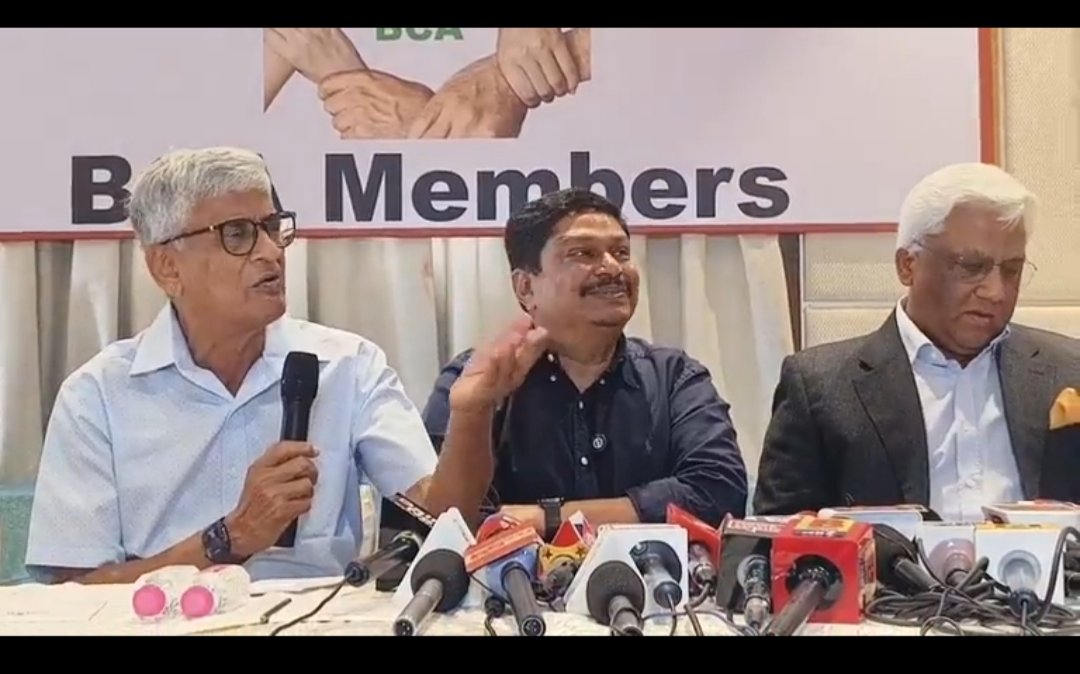
In the grand amphitheater of Indian cricket, where the royal legacy of Baroda whispers Satyamev Jayate—truth prevails—and a resonant voice declares, “We are together for cricket, cricket, cricket,” one can’t help but wonder: Is the game truly just about the bat and ball? Or does it extend to forging unbreakable bonds through stadiums that stand as monuments, pensions that honor the unsung, and talents that soar to national glory?
As the Baroda Cricket Association (BCA) embodies this royal ethos of unity and triumph since 2020, let’s probe deeper: What if cricket’s true victory lies not only in scores but in the ecosystem that sustains it? This article raises these pivotal questions, exploring BCA’s holistic achievements that transcend the pitch, blending on-field prowess with off-field vision.
On-Field Triumphs: Are Runs and Wickets the Only Measure of Glory?
Picture this: A team shattering records, players etching their names in history— but is that the full story of cricketing excellence? Since 2020, BCA’s Baroda squad has dominated domestic cricket, especially in white-ball formats. Twice runners-up in the Syed Mushtaq Ali Trophy (2020–21 and 2023–24), they made headlines in 2024 by smashing the highest men’s T20 total ever: 349/5 against Sikkim, clinching a record 263-run victory. Bhanu Pania’s blistering unbeaten 134 off 51 balls was the spark— but ask yourself: Doesn’t this reflect a deeper commitment to nurturing aggressive, world-class talent?
Individual stars have shone brightly too. In the 2025–26 edition, wicket-keeper Amit Pasi blasted a century on T20 debut in just 44 balls, matching the fastest by an Indian male. All-rounders like Atit Sheth, Ninad Rathva, and Krunal Pandya have delivered consistently, earning national caps. And what about the women’s side? Radha Yadav’s key role in India’s ICC Women’s World Cup win earned her a BCA felicitation in 2025. These feats beg the question: If on-field success is the heartbeat of cricket, isn’t BCA pumping life into it with unmatched vigor?
Building the Future: Can Stadiums Be the Unsung Heroes of Cricket’s Growth?
If cricket is a performance, then where’s the stage without world-class venues? Isn’t investing in infrastructure the ultimate “pro-cricket” move? BCA has answered affirmatively since 2020, transforming Baroda into a cricketing hub. The Baroda Cricket Association Stadium, launched in 2024, hosted its first men’s ODI on January 11, 2026—a milestone that put Vadodara on the global map with its state-of-the-art floodlights, amenities, and international-ready setup.
But why stop there?
The Kotambi Stadium project, rooted in a 2015 MoU with the Gujarat government and advancing through the 2020s, spans 29 acres at Rs 100 crores, promising a multi-purpose marvel. It was during the leadership of Pranav Amin ,when the stadium was built from skretch to 30000 spectators watching the thrilling ODI between India and Newszealand after 15 years at the state of art BCA stadium,which has become the marvel of Western India, highly appreciated by BCCI officials and entire cricketing fraternity of India.
Extending to rural roots, BCA’s district-level land acquisitions for training facilities raise another query: In a sport often urban-centric, isn’t grassroots infrastructure the key to unearthing hidden gems and ensuring cricket’s inclusive future?
Caring for the Guardians: Do Pensions Truly Honor Cricket’s Past While Securing Its Tomorrow?
Heroes fade from the spotlight, but should their legacies? What if supporting retired players isn’t charity, but a cornerstone of the game’s integrity? BCA shattered norms in November 2024 by launching pensions for any player with even one Ranji Trophy appearance—far beyond BCCI’s 25-match minimum. Effective January 1, 2025, it offers Rs 15,000 monthly for those with under 25 matches, scaling down to Rs 10,000 for 1–10 matches, and extends to widows for family security.
As BCA President Pranav Amin emphasized, this Cricketers Benefit Scheme incentivizes red-ball cricket while combating financial woes. By 2025, it was aiding countless families, complementing BCCI’s national boosts. This prompts reflection: In an era of fleeting fame, isn’t such welfare the royal decree that keeps cricket’s spirit alive, proving Satyamev Jayate through compassionate action?
Individual Milestones: Is One Woman’s Journey a Beacon for Collective Aspiration?
Teams win matches, but individuals inspire eras— so why overlook the trailblazers? Enter Rajkuvardevi Gaekwad, known as Geeta Gaekwad, a scion of Baroda’s royal lineage embodying the “we are together for cricket” mantra. Appointed administrative manager for the Indian women’s team during their 2021 England tour, she orchestrated seamless operations, paving the way for success. Today, as chairperson of BCA’s junior women’s cricket committee, she molds young talent, strengthening Baroda’s women’s program.
Though not the head coach—that honor went to figures like Ramesh Powar—her managerial prowess highlights BCA’s knack for producing leaders who elevate Indian cricket. This raises a profound question: If Geeta Gaekwad’s contributions symbolize unity and growth, doesn’t BCA’s role in such milestones prove that cricket’s royalty lies in empowering all?
A Balanced Legacy: Together for Cricket—And So Much More?
As the echoes of “cricket, cricket, cricket” fade into broader horizons, BCA’s post-2020 narrative challenges us: Can a sport thrive without holistic nurturing? From record-breaking innings to gleaming stadiums, generous pensions, and inspirational figures like Geeta Gaekwad, BCA weaves a tapestry of progress.
With district expansions and youth initiatives underway, it’s clear: Baroda isn’t just playing the game; it’s redefining it. For fans in Gujarat and afar, this royal-inspired approach whispers a final query—Isn’t this the true triumph where Satyamev Jayate reigns supreme in cricket’s endless pursuit?