

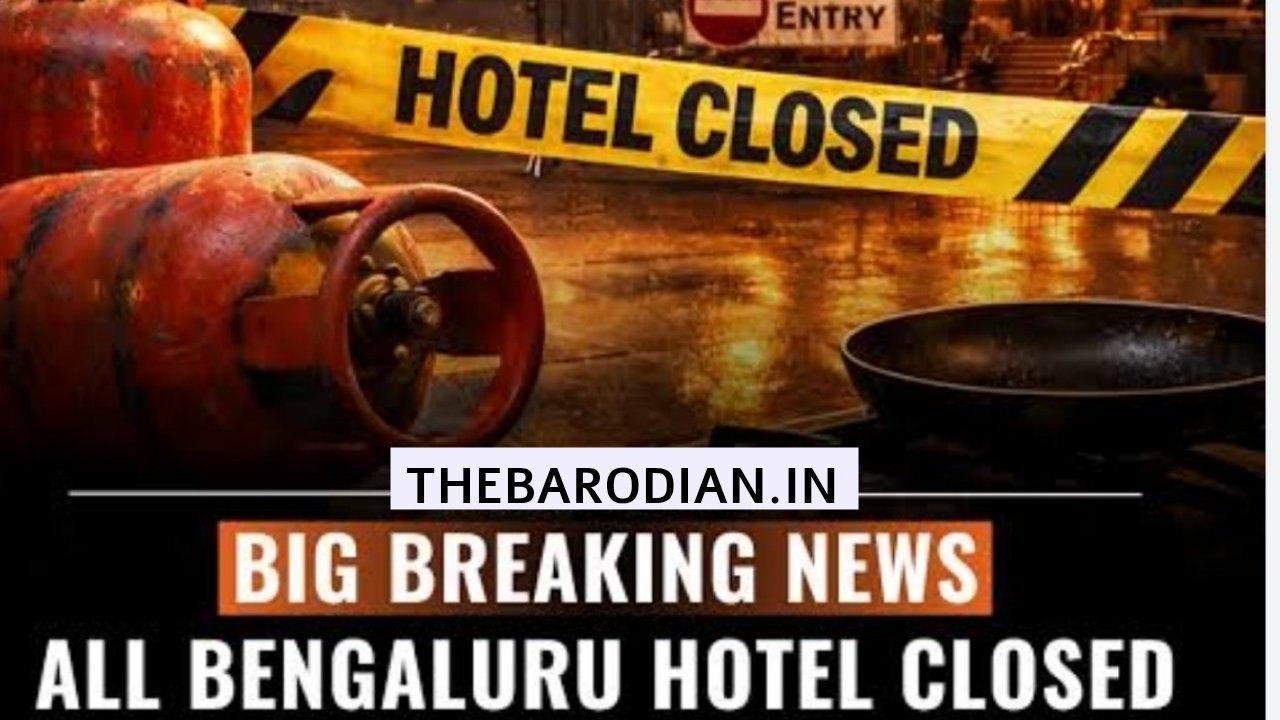
New Delhi/Anand, March 10, 2026 — Geopolitical flames from the Middle East have now reached Indian kitchens. The ongoing Israel-Iran conflict, intensified by direct U.S. involvement, has severely disrupted global LPG supply chains, triggering an acute shortage of commercial cooking gas cylinders across India’s major cities. Bengaluru has emerged as the hardest-hit area, with thousands of restaurants and hotels beginning indefinite closures today after commercial LPG deliveries came to a complete standstill.
The Bangalore Hotels Association issued an emergency statement late Monday declaring that the sudden halt in supplies — effective from March 9 — left the industry with no viable option. “Since the gas supply has stopped, the hotels will be closed from tomorrow,” the association announced, emphasizing that the sector functions as an essential service for lakhs of daily customers, including students, office-goers, doctors, senior citizens and families who depend on outside food. Association president P.C. Rao called the situation “a major blow to the hospitality ecosystem.” Black-market rates for 19-kg commercial cylinders have reportedly climbed to ₹2,500 in parts of the city, compared with official prices hovering between ₹1,883 and ₹1,958.
The root cause lies thousands of kilometres away in West Asia. India imports roughly 80–90 per cent of its LPG requirements from the Middle East, with a significant portion passing through the Strait of Hormuz, which has faced repeated threats and disruptions amid the escalating war. Tanker delays, cancelled loadings and sharply reduced export volumes from key producers have created a supply crunch. As the world’s second-largest LPG importer (consumption exceeded 33 million metric tonnes in the previous fiscal year), India remains highly exposed to regional instability. While the government has ordered domestic refineries to maximise LPG output under emergency provisions, the additional production has largely been diverted to protect household supplies, leaving commercial users in the lurch.
The ripple effects are spreading rapidly beyond Karnataka. In Mumbai, commercial cylinder refills have been virtually frozen since the weekend, pushing waiting periods to 2–8 days and forcing many restaurateurs into the black market, where 19-kg cylinders are now changing hands for up to ₹1,950 (up from the earlier ₹1,750 range). Pune has seen gas-dependent crematoriums temporarily shut operations. Hotel and restaurant associations in Chennai have sent urgent representations to the Prime Minister’s Office and state authorities, warning that prolonged shortages could inflict heavy damage on tourism and the local economy. Parallel difficulties are being reported from Punjab, Andhra Pradesh, Telangana, Gujarat and several other states as oil marketing companies ration or delay commercial deliveries to safeguard domestic cylinder availability.
The Ministry of Petroleum and Natural Gas has stressed that there is no formal ban on commercial LPG, but the explicit priority given to household cylinders has created the current imbalance. Officials maintain that domestic stocks should remain comfortable for the next 30–40 days. To ease longer-term pressure, state-owned refiners — Indian Oil, Bharat Petroleum and Hindustan Petroleum — have been directed to ramp up production aggressively.
Compounding the hardship, oil companies implemented fresh price increases effective March 7. Domestic 14.2-kg cylinders rose by ₹60 (now around ₹913 in the national capital), while commercial 19-kg cylinders went up by approximately ₹115, mirroring the surge in international benchmarks caused by the conflict.
Industry voices and energy analysts warn that sustained turmoil in the Gulf could expose deeper fault lines in India’s energy security architecture — from crude oil and LNG imports to retail inflation. While the full impact on petrol, diesel and aviation fuel may unfold more gradually, the immediate pain of LPG scarcity is acutely felt in everyday life and small-business survival.
With Bengaluru’s popular food streets and dining hubs going silent today and similar closures looming elsewhere, hoteliers, restaurant owners and trade bodies are pressing for swift government action to rebalance supplies. The next few days will reveal whether emergency domestic output increases and emergency sourcing arrangements can prevent a broader collapse of the hospitality sector.