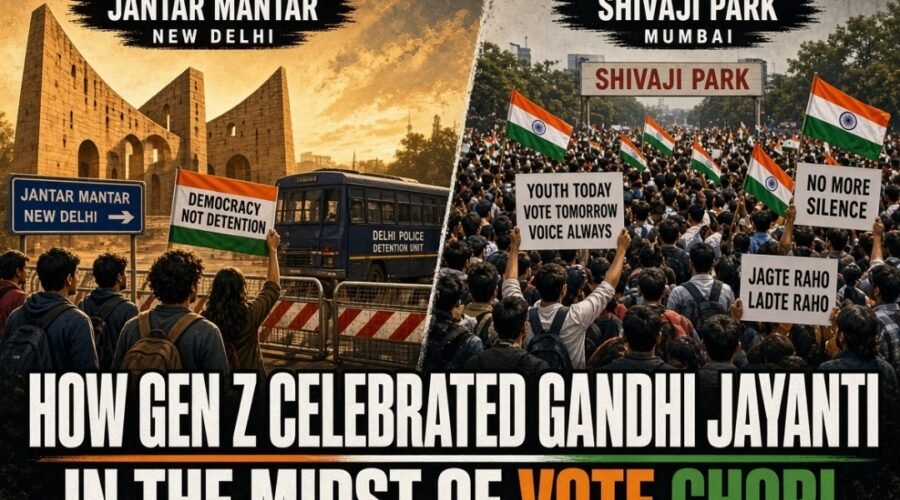
Delhi: sealed before it started. Student groups (AISA, SFI, DYFI, NSUI, Indian Youth Congress) and opposition parties, including AAP, had called people to Jantar Mantar. Delhi Police denied permission and imposed Section 163 of the Bharatiya Nagarik Suraksha Sanhita in New Delhi district. Approaches from Ashoka Road, Janpath and Tolstoy Road were barricaded; about 11 metro stations were closed; reports also described mobile internet suspended near the site. Police put the detentions at roughly 500 to more than 700 (Deccan Herald later put the day’s total nearer 1,000). Among those taken to buses were Atishi, Saurabh Bharadwaj, Sanjay Singh, Manoj Jha, Brinda Karat, Yogendra Yadav and AISA’s Neha Bora. Atishi called the handling “barbarism and brutality”; Yadav said that on Gandhi Jayanti the government was acting like the British. Indian Express and PTI match that sequence: permission refused, site sealed, people loaded onto buses before a meeting could begin.
Mumbai: denied, then held anyway. Mumbai Police had also refused Shivaji Park, citing a 4 January 2013 Bombay High Court order in PIL 116/2009, a 20 January 2016 state order, missing BMC permission, and the ground’s silence-zone status. Cockroach Janta Party founder Abhijeet Dipke answered with a “jail bharo” and went ahead. Routes from Dadar were barricaded and about 300 personnel deployed, but a crowd still formed — police about 4,000, organisers “thousands,” mostly young, with placards such as “Gyanesh BRO, JUST RESIGN” and “Gyanu, Tujha Democracy Var Bharosa Nay Kay?” Dipke opened with “Bharat Mata Ki Jai” and “Vande Mataram,” and tied the day to the earlier NEET sit-in that ended with Dharmendra Pradhan’s resignation. Shiv Sena (UBT) and MNS were reported in support. Tushar Gandhi was on the ground. PTI and Times of India confirm the gathering went ahead despite the denial.
Who showed up from film. On the ground, not merely online: Naseeruddin Shah (a clip of him thanking Dipke), Shabana Azmi, Vishal Dadlani (who led a “Go Gyanu Go”), and reports of Vishal Bhardwaj, Rekha Bhardwaj, Anand Patwardhan and comedian Raunak Rajani. Javed Akhtar backed it on X; the piece correctly treats that as support, not attendance. The author argues the names changed the photograph, not the evidence.
The underlying dispute the piece points to is an Indian Express investigation of 23 September: election commissioners Sukhbir Singh Sandhu and Vivek Joshi objecting, on record, at least 14 times in 10 months to SIR decisions they said were taken without them. The Commission’s position, as the article notes, is that the June 2025 order and later schedules were unanimous, and that the Form 6 declaration was upheld by the Supreme Court. Those two claims are what the crowds were arguing about; the film names did not settle them.
The piece’s own judgment is narrow: the political irony is real (a day the Republic spends praising non-violent assembly was the day Delhi did not let the assembly form), and whether Section 163 meets its legal test is a separate question from that sequence. Police call it order; protesters call it an atrocity. What is not in dispute is the order of events in Delhi, and that Mumbai’s denial did not produce an empty park.
Leave a Reply